Bachelor in Peace and Conflict
Study info
- Location: Majorstuen
- Progression: Full time
- Duration: 3 years
- Credits: 180
- Start semester: Autumn
- Language: Norwegian
- Application code: 190474
- Apply by: 15. April
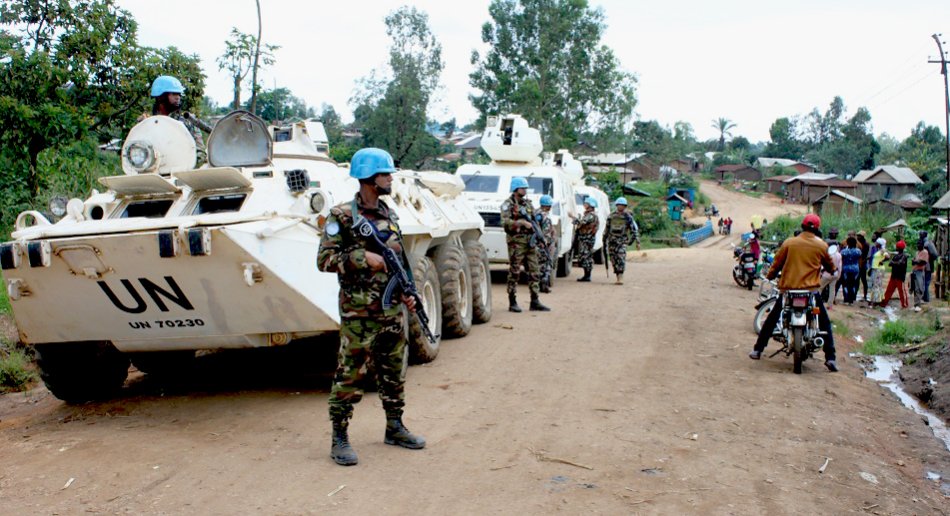
In an interconnected world, war and conflict is something affecting us all. Are you interested in international relations, violent conflicts, and how to create peace? A Bachelor's in Peace and Conflict Studies at MF provides you with knowledge and analytical tools to understand how wars arise and peace is built.
The program offers an interdisciplinary approach, drawing insights from political science, sociology, history, and philosophy to give you a broad understanding of complex topics such as:
- Causes of war and violent conflict
- Ethics of war and international law
- International relations, terrorism, and security policy
- Peace negotiations and diplomacy
- Links between democratization, conflict, and reconciliation
- Aid and peacebuilding after civil war
- The role of religion in both war and peace
You’ll be equipped to analyze key issues related to peace and conflict, and how these relate to global power dynamics, sustainability, and justice. You will also receive a general introduction to social sciences, including training in methodology and central theories.
Norway has a long tradition of peace work, and Oslo is an exciting place to study and work in this field, with institutions like the Nobel Peace Center and PRIO (Peace Research Institute Oslo). The program also has an international focus, with opportunities for a semester abroad at one of MF’s partner institutions.
Career Opportunities
A degree in peace and conflict qualifies you for work in areas such as:
- Media
- Public sector
- Aid and humanitarian organizations
- Academia
Potential employers include:
- Ministry of Foreign Affairs
- United Nations system
- Norwegian Church Aid
- Directorate of Immigration – UDI
- Intelligence services
- Political parties, advocacy groups, and think tanks
You will also have many opportunities to pursue master’s studies in Norway or abroad.
About the study
Programme structure
The Bachelor's degree in Peace and Conflict Studies consists of 180 ECTS credits:
- 130 ECTS in social sciences
- 20 ECTS in philosophy and methodology (ex.phil and ex.fac)
- 30 ECTS elective courses
The semester breakdown is as follows (read bottom-up):
| 6. sem. | MET2000 Methodology for bachelor students |
BAO2800 Bachelor thesis (20 stp) |
|
|---|---|---|---|
| 5. sem. | SAM2050 Big questions in International Politics (Elective) |
SAM2085 Power and resistance (Elective) |
SAM2090 Religion and Politics (Elective) |
|
Optional exchange 5th semester |
|||
| 4. sem. | SAM2080 Globalization and History |
Political Use of Power and Holy War | SAM2095 Peacebuilding after Civil War |
| 3. sem. | SAM2055 International Peace and Security |
SAM2020 Genocide |
EX1025 Examen facultatum, (Social Science variant) |
| 2. sem. | SAM1040 Democracy and Citizenship |
SAM1050 International Politics |
EX1010 Examen philosophicum |
| 1. sem. |
SAM1000 |
SAM1090 Introduction to Peace and Conflict Studies |
|
| Semester | 10 studiepoeng | 10 studiepoeng | 10 studiepoeng |
Elective courses
Electives should ideally be within humanities or social sciences. You have broad freedom in choosing electives. Recommended electives are listed for the 5th semester.
You may also:
- Go on exchange to a partner institution abroad (recommended in the 5th semester
- Transfer credits from other institutions
-
Take other MF courses (note: some advanced courses require prerequisites)
Learning outcome
Knowledge
After completing the programme, you will:
Skills
You will be able to:
General Competence
You will be able to:
Exchange programme
MF has exchange agreements with several partner universities. You can find more information on MF’s exchange pages. Plan your exchange early - ideally a year in advance. The 5th semester is recommended for studying abroad.
Further studies and career opportunities
A degree in peace and conflict studies qualifies you for work in fields such as academia, media, the public sector, development aid, and humanitarian organizations. Potential employers include the Ministry of Foreign Affairs, the United Nations system, Norwegian Church Aid, the Directorate of Immigration (UDI), the intelligence services, political parties, advocacy groups, and think tanks.
You will also have a wide range of opportunities to pursue master's-level studies, either in Norway or abroad.

Related studies
Årsstudium i fred og konflikt
- Duration: 1 year
- 60 credits
- Start semester: Autumn

Bachelor i religion og politikk
- Duration: 3 years
- 180 credits
- Start semester: Autumn

Bachelor i demokrati og mangfold
- Duration: 3 years
- 180 credits
- Start semester: Autumn
Master i demokratisk beredskap
- Duration: 2 years
- 120 credits
- Start semester: Autumn