
The Director of MF L-MaSDR Identifies a New Manuscript in Zürich
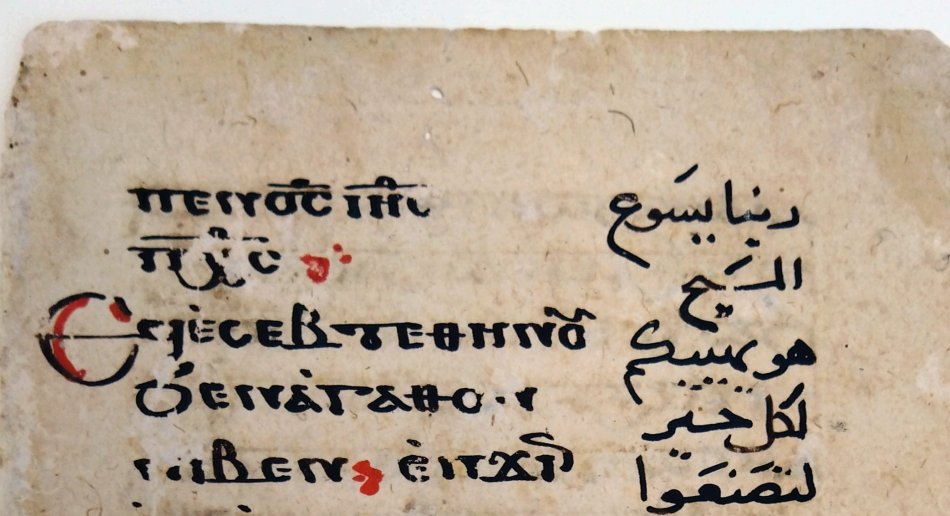
During his visit to the Zentralbibliothek Zürich, Mina Monier had the privilege of examining uncatalogued material, among which he identified a previously unrecognised Coptic–Arabic manuscript fragment. The library’s preliminary records described it as a nineteenth-century Greek–Arabic fragment of a psalter, “presumably from Egypt”.
Upon inspection, however, Monier identified the fragment (MS Z V 367.12 a) as part of a Bohairic Coptic–Arabic liturgical manuscript, which he provisionally dates to the medieval period. It contains excerpts from several psalms, written in Coptic only, alongside bilingual readings from the Gospel of Luke and the Epistle to the Hebrews. “The Arabic handwriting,” Monier observes, “strongly resembles that found in manuscripts from the Ayyubid and Mamluk periods.”
A manuscript made for liturgical use
The surviving leaves appear to have belonged to a larger codex intended for liturgical use. Its precise function remains to be established through further examination, which Monier plans to undertake.
For Monier, the fragment’s particular interest lies in the glimpse it offers into the multilingual world of Egyptian Christianity. The textual sequence follows the Coptic reading order, from left to right, while the foliation appears to proceed in the opposite direction, following Arabic usage. This suggests that the manuscript was navigated according to different reading conventions.
Coptic, Arabic — and Greek
Another striking feature is the Greek heading introducing the Gospel of Luke. Although the use of Greek in such headings is not itself unusual, the copyist employs a form of abbreviation for kephalaion (“chapter”) characteristic of Byzantine Greek manuscript practice, followed by the Greek division number (albeit wrong!).
This combination raises questions about the transmission of textual conventions between Coptic and Greek-speaking Christian communities in Egypt.
Tracing connections between Christian communities
For Monier, it offers a promising starting point for investigating how Copts and Melkites shared knowledge and potentially exchanged manuscripts—questions that also inform the study of codices such as Alexandrinus. It is hoped that more insights will be obtained when the analysis of both the Coptic and Greek texts is complete, yet it can be illustrated that they are not dependent on each other.
Part of the UnGos research journey
The identification forms part of Monier’s research journey through several Swiss cities and onwards to Egypt, where he is consulting manuscripts and meeting specialists relevant to Unconventional Gospels (UnGos), his project funded by the Research Council of Norway.
More articles from MF L-MaSDR
Using AI Agents to Prototype a Manuscript VRE
Published: 25. June 2026
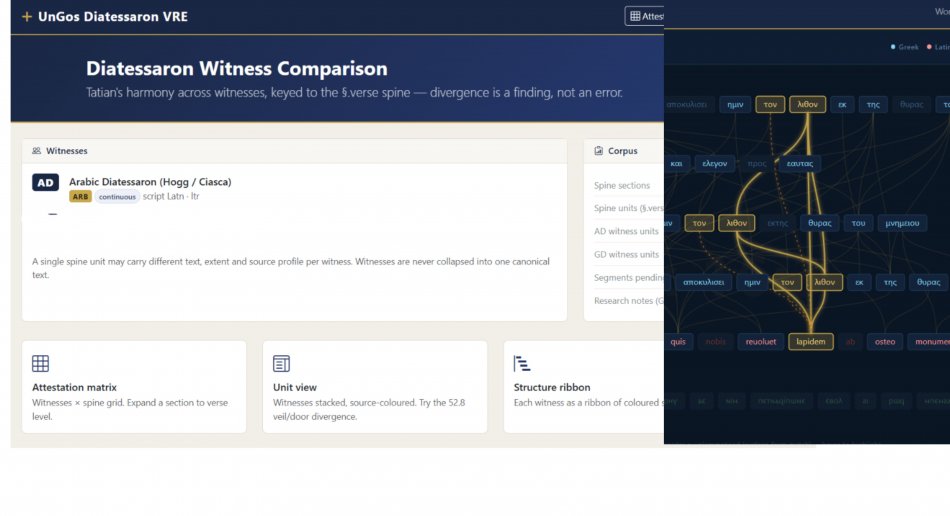
This post presents an experiment in AI-assisted digital humanities development. Using Claude Code, I built a local prototype of a Virtual Research Environment (VRE) for the study of Tatian’s Diatessaron. The purpose was to test whether AI-assisted coding can help transform manuscript data, research notes, and a conceptual model into a working tool for visualization, collation, and textual comparison.
Distant Reading: analyzing the Gospels with Python and AI
Published: 19. February 2026
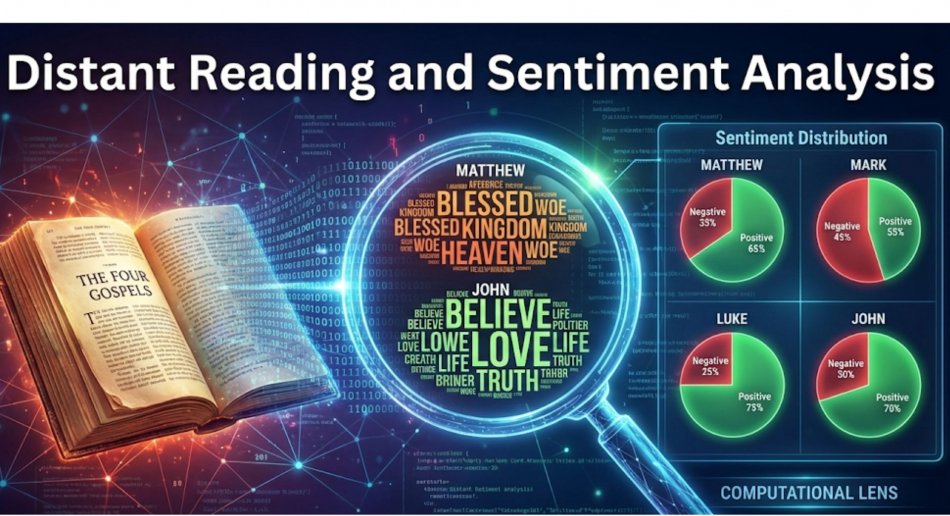
In Digital Humanities, distant reading uses computational tools to explore patterns across texts - patterns that may be difficult to perceive through close reading alone. Instead of replacing traditional interpretation, it complements it by providing statistical overviews that highlight tendencies, repetitions, and contrasts.
Artificial Intelligence and the Humanities: New Opportunities and Challenges
Published: 18. February 2026
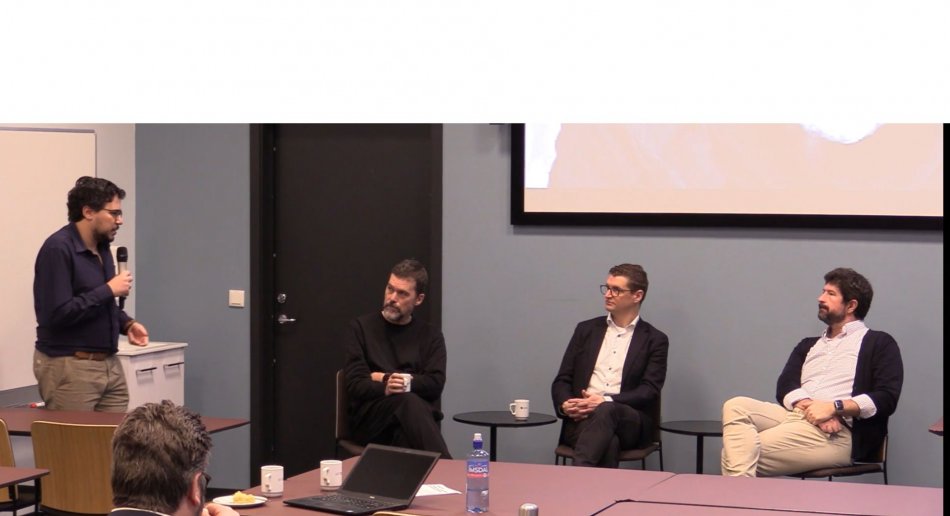
In December 2025, L-MaSDR hosted a seminar exploring the opportunities, challenges, and responsibilities that AI presents for humanistic research. Watch the presentations here.
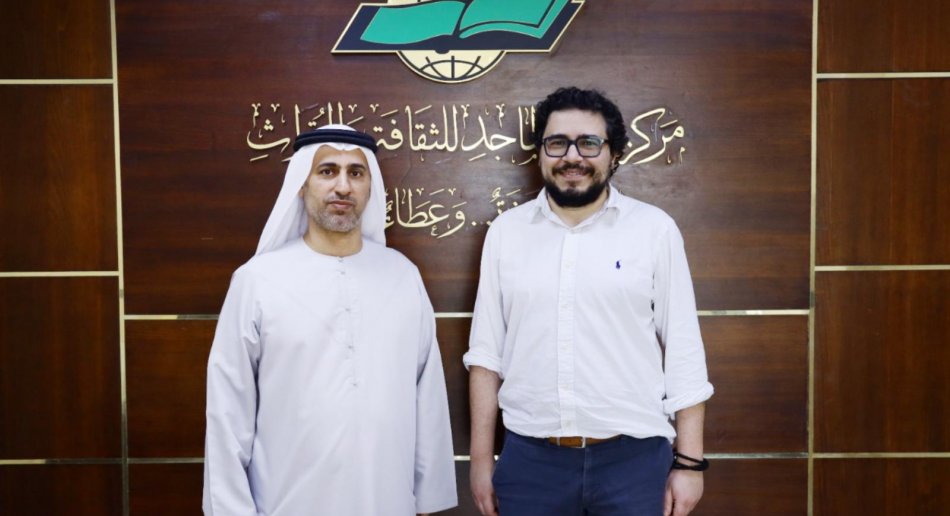
A Visit to Juma Al Majid Center for Culture and Heritage
Published: 29. January 2026
During a two-week research stay in the United Arab Emirates, sponsored by the NYU Abu Dhabi Humanities Research Fellowships, the director of MF L-MaSDR had the opportunity to engage with several pioneering institutions.