
Writing and teaching Contested History
In South Sudan, history textbooks are meant to unite a nation—but they can also reopen old wounds. As competing memories meet official narratives in the classroom, the question becomes not only what history is taught, but whose stories are told.
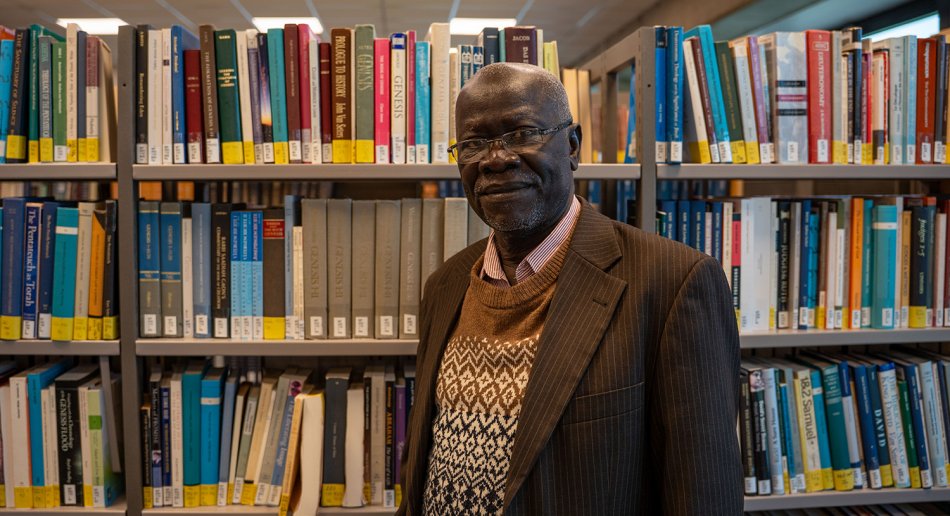
As a part of the JUSTHIS project at MF, Dr. Yosa Wawa, a professor of history from the University of Juba, visited Oslo this March. The JUSTHIS project explores how history is taught in classrooms across the Nile Valley, in countries where conflict and division have shaped both past and present. During this visit, dr. Wawa gave a lecture on contested historical narratives in history textbooks in South Sudan.
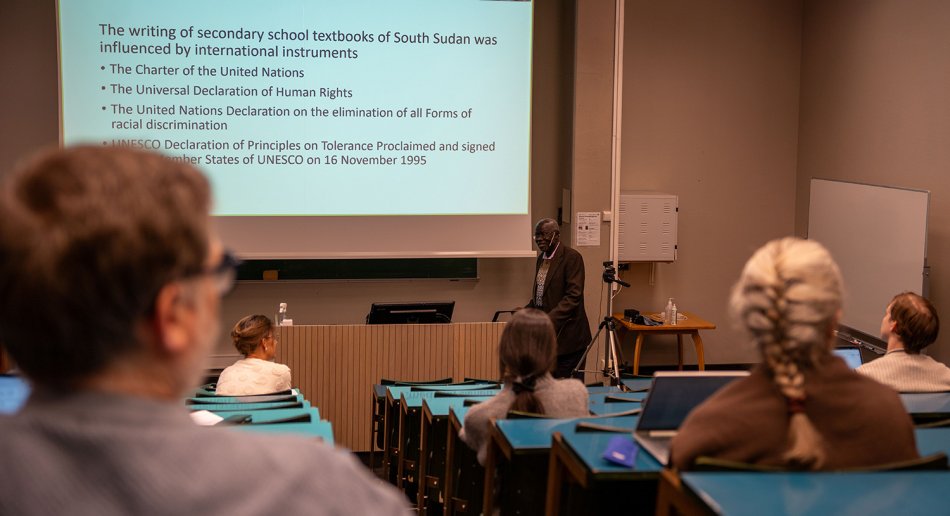
In South Sudan, history textbooks are more than school materials. The curriculum framework aims at developing citizens who are patriotic and proud of their rich culture and heritage, and committed to unity, democracy, human rights, gender equity, peace and reconciliation. The problem then becomes what should be included or left out in history textbooks given the diversity of cultural practices, and peace and conflict prevention in the midst of conflicts?
Shaping the future
Why are history textbooks such an important issue in South Sudan today?
– Because they are not just about the past — they are about the kind of future we want. In South Sudan, our education system is guided by international principles such as UNESCO declarations and conventions against racial discrimination. These ideas are also reflected in our General Education Act of 2012, which emphasizes unity, peace, respect for diversity, and reconciliation, dr. Wawa explains.
– The intention is to educate young people who are proud of their culture and heritage, but also committed to democracy, human rights, gender equality, and peaceful coexistence. The challenge comes when you ask: what history do we include, and what do we leave out, especially in a country with so many cultures and a painful history of conflict, he elaborates further.
Curriculum in Conflict
The push to create a national curriculum began with international engagement, where education leaders connected with experts experienced in post-conflict reform. This led to a large collaborative effort involving local and regional specialists who studied global education systems and worked intensively to shape the curriculum.
When textbook production began, selecting a publisher became highly contentious.
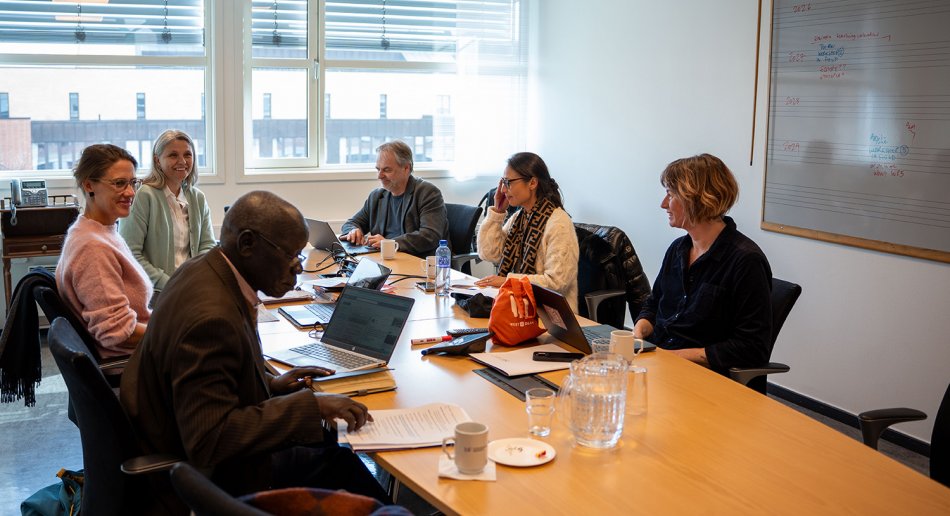
– Tensions ran so high that, at one point, ministry officials were asked to leave the room, Dr. Wawa notes.
Once produced, the books were found to contain serious factual inaccuracies, cultural missteps, and historical inconsistencies. Reviews and revisions followed, but problems persisted despite repeated efforts.
The textbooks were ultimately approved in 2017 and officially launched the following year. A nationwide teacher training effort followed, reaching around 26,000 educators—just over half of the country’s teaching workforce.
Contested History
You describe the textbooks as containing “contested history.” What do you mean by that?
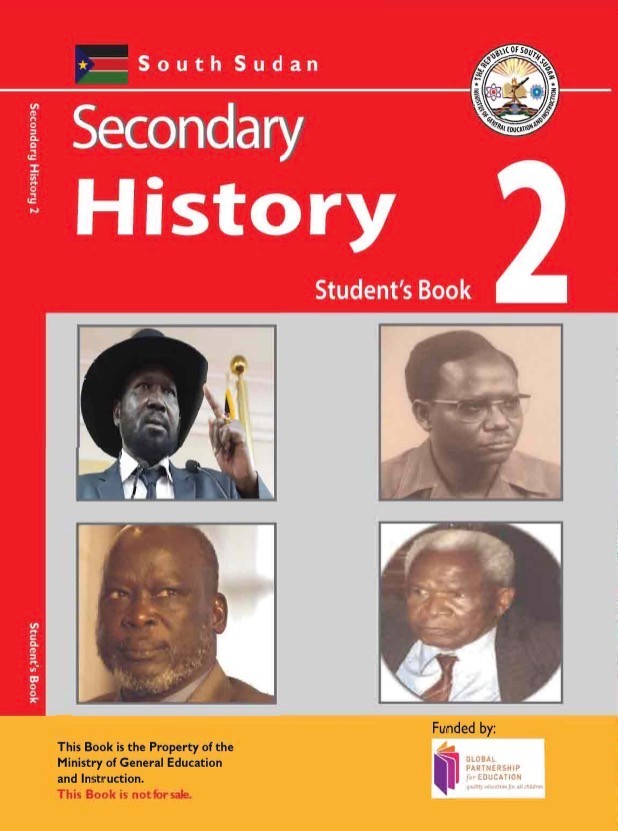
– Contested history refers to events or descriptions that are controversial because they can cause harm or deepen divisions. Some sections of the secondary‑school textbooks are deeply problematic.
For example one book shows a Zande person wearing a cross portrayed as a witch doctor, drawing heavily from outdated anthropological work.
– Witchcraft is a very sensitive issue, and asking students to discuss it with elders could actually put teachers at risk of being dismissed, dr. Wawa explains
– In another case, a Nuer student writes a letter to a Dinka student comparing community poverty with the wealth of political leaders. One has to ask — is this meant to promote understanding, or does it risk inciting resentment?
This tension between intended learning outcomes and potential unintended effects becomes even clearer when considering the role of teachers in mediating between textbooks and lived experience.
– History lives both in books and in people’s memories. When textbooks contradict lived experience, teachers are placed in an impossible position. They must either follow the book or manage the emotional and political reality in the classroom. As they stand, these textbooks contradict the goals of integration, peace, tolerance, and reconciliation that our education system claims to promote.
More articles from Research
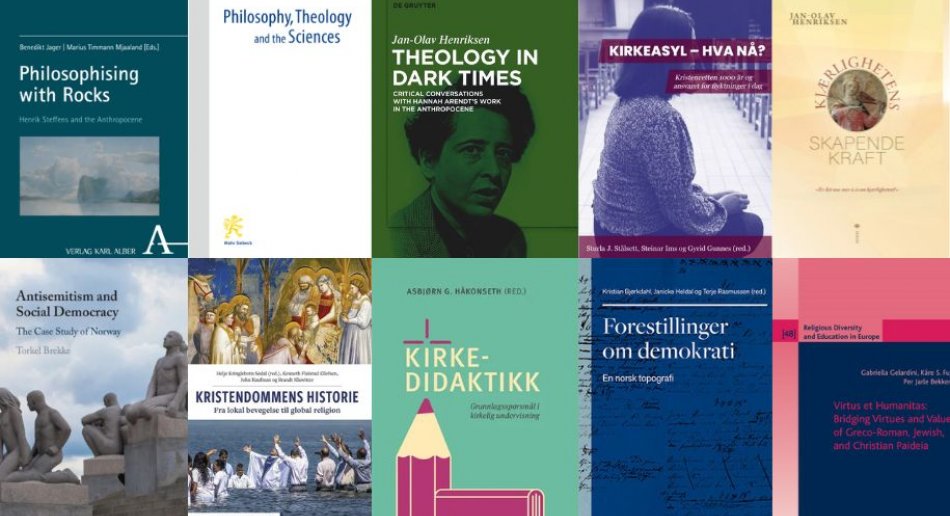
Publications from MF reserachers
Published: 23. September 2026
Through books, book chapters, and scholarly articles, researchers at MF contribute to new knowledge and academic dialogue, both nationally and internationally. Here is a selection of publications from recent times.
An Overlooked Part of Europe’s Intellectual History
Published: 24. April 2026
A central part of Europe’s intellectual history has long been overlooked, says Doctoral Research Fellow Zeshan Ullah Qureshi.
– Europe has not only imagined Islam. It has read, translated, and interpreted the Qurʾān for nearly a thousand years.

What Makes Engagement Truly Meaningful?
Published: 30. March 2026
Volunteering is often celebrated as a force that strengthens communities, nurtures solidarity, and fills societal gaps. But what actually happens to individuals when they begin volunteering?

'From the River to the Sea'. Religion and Politics in the Middle East, Past and Present
Published: 27. March 2026
After Hamas’ terrorist attack on Israel on 7 October 2023 and the subsequent warfare between Israel and Hamas, the expression “From the River to the Sea” has been frequently used, debated, and condemned by various sides of the conflict, as well as internationally.