

What Makes Engagement Truly Meaningful?
Volunteering is often celebrated as a force that strengthens communities, nurtures solidarity, and fills societal gaps. But what actually happens to individuals when they begin volunteering?
Prosjektgruppe

Prof Dr Tatjana Schnell

Dr Jane Hergert
The project has been a part of the Existential Psychology Lab
And what conditions must be in place for both volunteers and organisations to benefit from their collaboration? These are the central questions behind Making Sense of Volunteering, a research project conducted by Prof. Dr. Tatjana Schnell and Dr. Jane Hergert.
The project, funded by Deutsche Stiftung für Engagement und Ehrenamt and running from September 2024 to December 2025, has taken a longitudinal approach: following volunteers and organisations over time and comparing new volunteers with individuals who choose not to volunteer. By doing so, the researchers sought not just to measure outcomes, but to understand the dynamics that make voluntary work meaningful, satisfactory, and sustainable.
Volunteering as a Pathway to Meaning
One of the project’s most compelling insights is that volunteering appears to enhance a person’s sense of meaning in life. After only three months, more than half (55%) of new volunteers reported an increase in meaning—and the effect was even stronger among those who started out with a lower sense of meaning, where the number rose to an impressive 87%.
What explains this? The data suggests that meaning grows when volunteers feel aligned with their work. Identification with the volunteer role — feeling that it suits them, matters to them, and resonates with their interests — correlates strongly with increases in meaning in life. In fact, every single respondent (100%) found their voluntary work at least somewhat meaningful.
Meaningful engagement may involve challenges, frustrations, or emotional demands that do not necessarily boost happiness — but still deepen one’s sense of purpose.
However, the researchers also uncovered an intriguing nuance: while meaning increased, general life satisfaction did not. This suggests that meaningful engagement may involve challenges, frustrations, or emotional demands that do not necessarily boost happiness — but still deepen one’s sense of purpose.
As project director Tatjana Schnell puts it, “Voluntary engagement means getting involved and taking on challenges. This creates meaning – but it does not necessarily make people more satisfied with their lives”.
Meaningful Collaboration Depends on Fit
The study also focused on the relationship between volunteers and their organisations. Here, the message is clear: fit matters. The more volunteers and organisations agreed on their “core concerns”—their fundamental goals and values—the more satisfied both sides were with the collaboration.
This fit has two dimensions:
- Purpose alignment: Do the volunteer’s and organisation’s ultimate goals match?
- Activity alignment: Are volunteers actually doing tasks that match their interests and motivations?
Many organisations struggle here. The researchers note that organisations often lack clear information about what volunteer roles entail or what prospective volunteers are looking for, making recruitment unnecessarily difficult. For volunteers, this lack of clarity means missed opportunities for engagement that could have been both meaningful and well‑suited to them.
One additional finding points to a diversity challenge: despite broad sampling, only 15% of volunteers had a migrant background, indicating barriers to inclusion that may require targeted attention.
Keep Motivation From Turning Into Cynicism
The findings carry clear signals for policymakers. Meaning in life is more than a private resource – it’s a societal one. When people experience their lives as meaningful, they are more motivated, responsible, and committed.
But the research warns that poor organisational structures or incoherent political decisions can undermine this motivation. When eager volunteers face obstacles, their initial enthusiasm may shift toward disappointment or cynicism.
To safeguard volunteering as a social resource, policymakers should support:
- Visibility and recognition of volunteers
- Frameworks that make volunteering compatible with everyday responsibilities
- Consistent and coherent political decisions that enable, rather than obstruct, voluntary engagement
Implications for Organisations
For organisations, the takeaway is equally strong: a good person organisation fit doesn’t happen by accident. It requires openness about the organisation’s values and goals, as well as about the concrete tasks volunteers will perform.
Organisations should:
- Present themselves clearly – what they stand for, what they aim to achieve
- Offer transparent and detailed descriptions of volunteer roles
- Understand the diversity of volunteer motivations and interests
- Build structures that support both recruitment and long term sustainability
Implications for Science
The project also contributes to academic understanding of volunteering. It demonstrates that tools and theories used to study paid work, particularly around person environment fit, are equally relevant in the voluntary sector.
Moreover, it challenges the dominant focus on life satisfaction in well being research. People may willingly engage in meaningful activities that are demanding, uncomfortable, or even dissatisfying, precisely because those activities matter to them.
Frivillighet befinner seg i denne unike sonen hvor formål og utfordring møtes
In other words, the pursuit of meaning is not the pursuit of comfort. And volunteering occupies this uniquely rich space where purpose and challenge coexist.
A More Honest View of Meaningful Engagement
Ultimately, Making Sense of Volunteering paints a nuanced yet hopeful picture. Volunteering appears to be a powerful pathway to meaning, especially for those who start out with less of it. It thrives when volunteers and organisations share common ground and when individuals feel that their efforts matter.
But it also requires honest expectations: meaningful engagement is not always easy, nor does it guarantee increased life satisfaction.
Instead, it offers something deeper – a sense of significance, contribution, and coherence. And for many, that is precisely why it is worth it.
More articles from Research and Existential Psychology
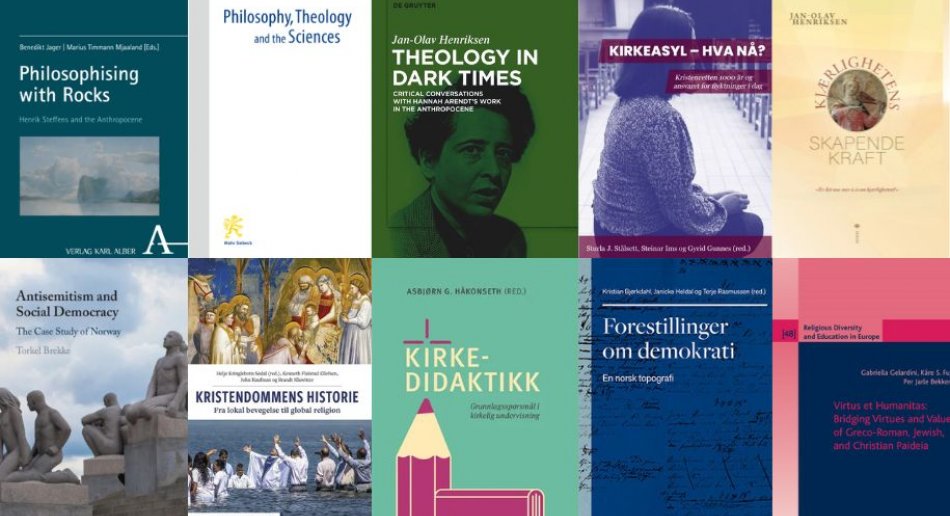
Publications from MF reserachers
Published: 23. September 2026
Through books, book chapters, and scholarly articles, researchers at MF contribute to new knowledge and academic dialogue, both nationally and internationally. Here is a selection of publications from recent times.
Writing and teaching Contested History
Published: 17. July 2026
As competing memories meet official narratives in the classroom, the question becomes not only what history is taught, but whose stories are told.
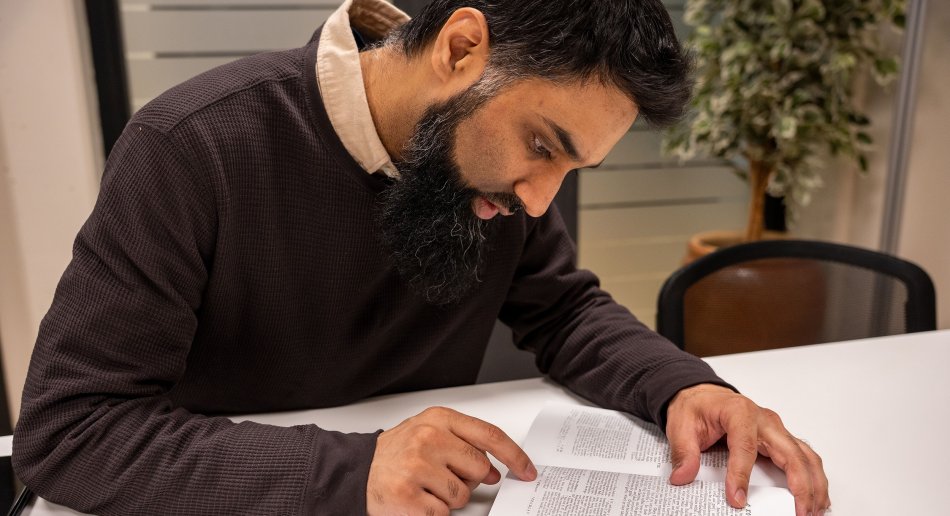
An Overlooked Part of Europe’s Intellectual History
Published: 24. April 2026
A central part of Europe’s intellectual history has long been overlooked, says Doctoral Research Fellow Zeshan Ullah Qureshi.
– Europe has not only imagined Islam. It has read, translated, and interpreted the Qurʾān for nearly a thousand years.

'From the River to the Sea'. Religion and Politics in the Middle East, Past and Present
Published: 27. March 2026
After Hamas’ terrorist attack on Israel on 7 October 2023 and the subsequent warfare between Israel and Hamas, the expression “From the River to the Sea” has been frequently used, debated, and condemned by various sides of the conflict, as well as internationally.