
An Overlooked Part of Europe’s Intellectual History
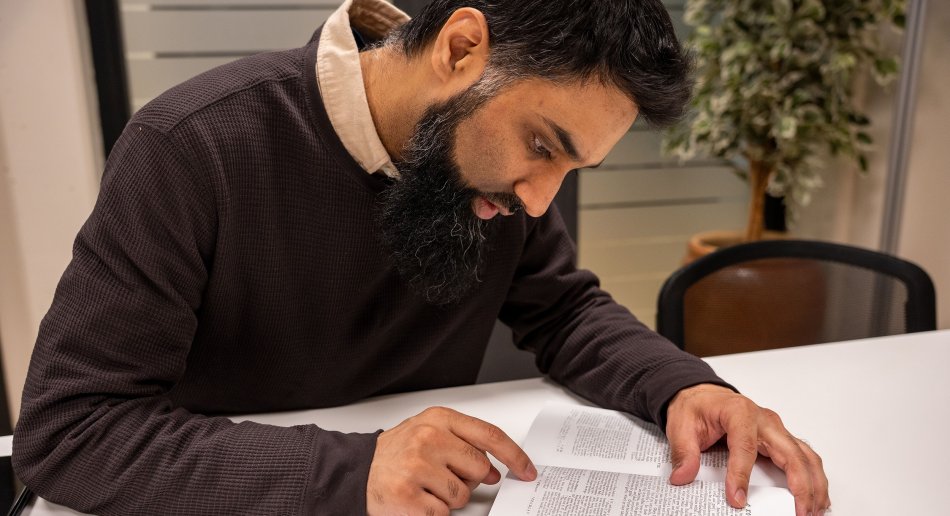
A central part of Europe’s intellectual history has long been overlooked, says Doctoral Research Fellow Zeshan Ullah Qureshi. In his research, he shows how European scholars worked closely with the Qurʾān over several centuries. – Europe has not only imagined Islam. It has read, translated, and interpreted the Qurʾān for nearly a thousand years.
Zeshan Ullah Qureshi studies the European reception of the Qurʾān from the Middle Ages to the Enlightenment. In his work, he examines how European scholars actually read and engaged with Islamic texts through translations, manuscripts, and sustained textual study.

– Few people are aware of the history of European scholars who read, worked with, and sought to understand Islamic texts in a systematic and structured way. Yet in archives, libraries, and research literature, there exists a history of translations, manuscripts, and scholars who spent many years of their lives studying the Qurʾān and other Islamic writings, he explains.
The article is based on a recently published essay in the intellectual and philosophical journal Salongen, in which Qureshi argues that European intellectual history has overlooked a central tradition: the study of the Qurʾān.
In doing so, Qureshi contributes to an ongoing scholarly debate within intellectual history about what actually constitutes Europe’s intellectual heritage.
History shows that European intellectuals did not merely write about Islam, but worked with the Islamic textual tradition as both a material and intellectual object.
Not Just Imagined
Qureshi believes this points to a much closer and more complex relationship between European scholarship and Islam than is often reflected in accounts of the history of ideas.
– History shows that European intellectuals did not merely write about Islam, but worked with the Islamic textual tradition as both a material and intellectual object.
This work included translations, philological studies, and the use of classical Muslim commentaries. Many European scholars treated the Qurʾān as a demanding textual object of study, where linguistic precision and interpretation were central.
In his PhD project, Qureshi investigates how European scholars worked with Arabic manuscripts in translating the Qurʾān, and to what extent these sources formed an integral part of their intellectual work.
A Blind Spot in Global Intellectual History
Qureshi connects his research to ongoing discussions about global intellectual history, which he describes as a necessary project, especially when it comes to including ideas and thinkers from outside Europe.
At the same time, he argues that one perspective is often missing: how European scholars actually worked with these traditions within their own contexts.
– When we talk about global intellectual history, we often focus on how ideas originated outside Europe and later influenced European thought. What we ask less often is how European scholars actually worked with these ideas in their own contexts, based on oriental manuscripts.
Today, this practice is largely forgotten.
– How they read, interpreted, were influenced by, and translated these texts is now forgotten knowledge for most people. This is where the history of the orientalists comes in.
Reconstructing this history is not just an addition to global intellectual history. It is a necessary condition for understanding how ideas actually move between cultures.
Why This Matters
For Qureshi, the aim of this research is not to idealize Europe’s encounter with Islam, but to provide a more precise account of how knowledge has been produced through encounters between different linguistic and religious traditions.
– Reconstructing this history is not just an addition to global intellectual history. It is a necessary condition for understanding how ideas actually move between cultures.
The topic also concerns Europe’s own understanding of its intellectual history and which traditions are considered part of it.
– What happens when we begin to take this seriously as part of our own intellectual heritage?
Qureshi thus points to the need to broaden our understanding of what counts as part of Europe’s intellectual history.
Read more about Qureshi's doctoral project:
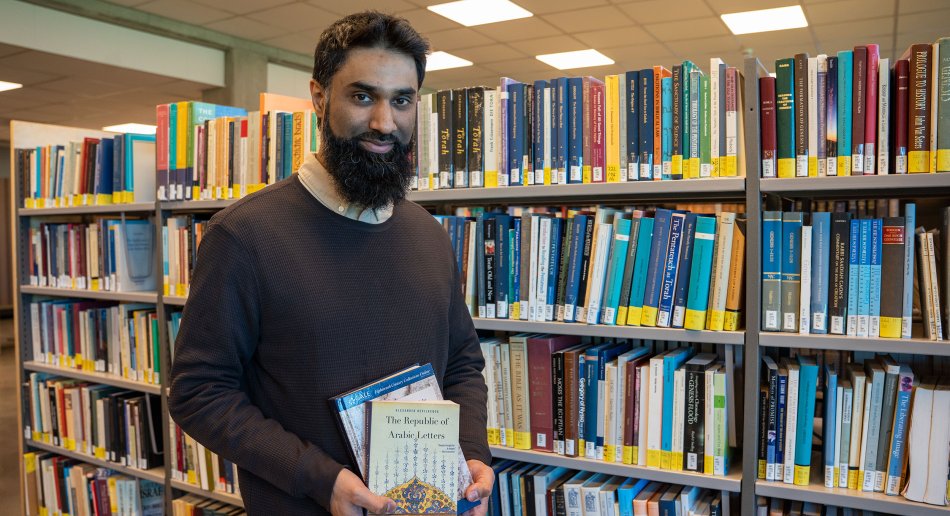
The Role of Orientalism in the History of the Qurʿān
Published: 9. April 2025
Do you know how the first English translation of the Qurʿān directly from Arabic came to be? It’s a fascinating result of a race between the Protestant and Catholic churches. Zeshan Ullah Qureshi explores how sharp polemics, impressive philology, and Christian rivalry have shaped both Europe’s encounter with the Qurʿān and European thought itself.
More articles from Research
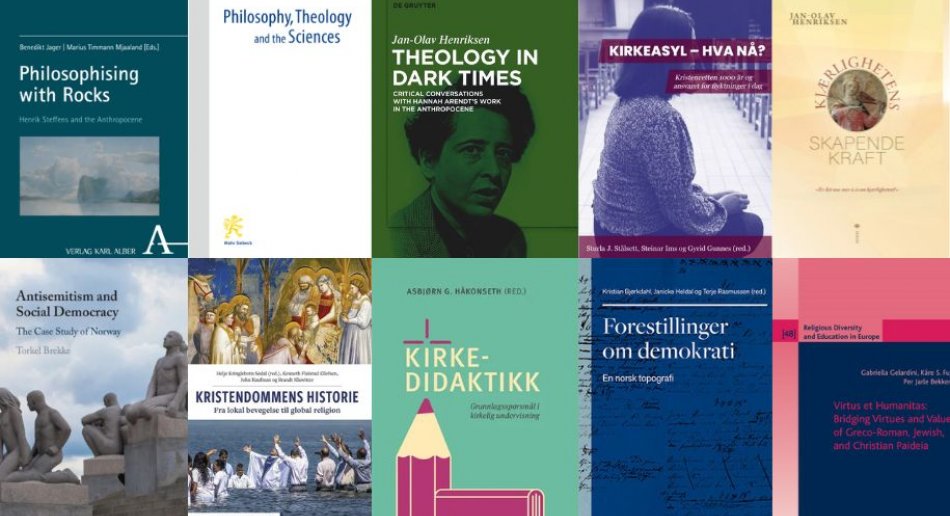
Publications from MF reserachers
Published: 23. September 2026
Through books, book chapters, and scholarly articles, researchers at MF contribute to new knowledge and academic dialogue, both nationally and internationally. Here is a selection of publications from recent times.
Writing and teaching Contested History
Published: 17. July 2026
As competing memories meet official narratives in the classroom, the question becomes not only what history is taught, but whose stories are told.

What Makes Engagement Truly Meaningful?
Published: 30. March 2026
Volunteering is often celebrated as a force that strengthens communities, nurtures solidarity, and fills societal gaps. But what actually happens to individuals when they begin volunteering?

'From the River to the Sea'. Religion and Politics in the Middle East, Past and Present
Published: 27. March 2026
After Hamas’ terrorist attack on Israel on 7 October 2023 and the subsequent warfare between Israel and Hamas, the expression “From the River to the Sea” has been frequently used, debated, and condemned by various sides of the conflict, as well as internationally.