
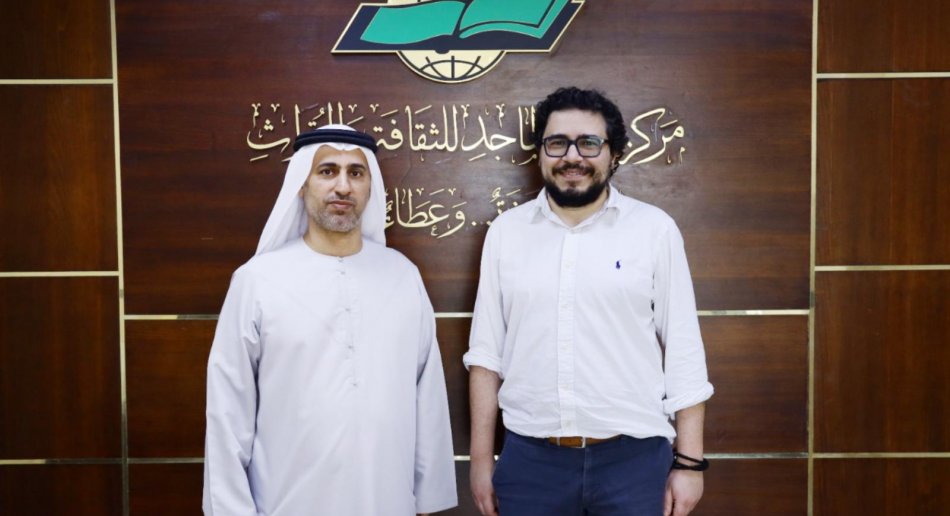
A Visit to Juma Al Majid Center for Culture and Heritage
During a two-week research stay in the United Arab Emirates, sponsored by the NYU Abu Dhabi Humanities Research Fellowships, the director of MF L-MaSDR had the opportunity to engage with several pioneering institutions. Dr. Monier explored a range of facilities in both Abu Dhabi and Dubai that are renowned for their innovative approaches to manuscript studies and the digital humanities.
Of these places, he had the privilege of visiting the Juma Al Majid Center for Culture and Heritage in Dubai. This center was established by the renowned Emirati philanthropist, Juma al-Majid. A self-made business magnate, Mr. al-Majid established this nonprofit center to preserve endangered human heritage. The center’s activity focuses on the material preservation and digitisation of rare books and manuscripts, recognising no cultural or religious limitations to its scope of interest.
For me, there is no distinction between one book and another; my mission is to save it wherever it is found.
-al-Majid
"For me, there is no distinction between one book and another; my mission is to save it wherever it is found," said al-Majid while defining the rationale of the center.
“I was very young when I first saw Mr. al-Majid,” said Monier. “He came to visit our church in Alexandria to fund the restoration of damaged manuscripts in the ancient patriarchal library. He set a wonderful example for my young self on how religious boundaries are overcome by shared human heritage. It was a dream for me to visit the center and to get to know more about its noble mission. Nearly two decades later, this dream was fulfilled.”
Facilities, Collections and Operations
Monier was received by Mr. Anwer Saad, the head of the public relations department, who showed him the activities of the center. “I was stunned by the sheer scale of operations: a complete line of knowledge production, from manufacturing the materials used to restore damaged manuscripts, to digitisation, and even printing large publications and facsimiles.”
Besides the dedicated restoration and digitisation labs, the center houses five stories of archival material, including thousands of manuscripts and tens of thousands of rare books. This includes entire libraries of famous thinkers and writers who donated their collections to the center to be curated.
Mobile Preservation: The Al Majid Restoration Machine
Yet, the most extraordinary activity was their mobile “Al Majid Restoration Machine,” an entire lab ready to be sent anywhere in the world to perform restoration and digitisation in situ, free of charge. Today, their digital repository hosts nearly one million photos of digitised folios, made entirely available for any student or researcher to access freely.
“The UAE’s drive for future advancement in digital humanities and manuscript studies is a formidable force.
-Mina Monier
Manuscript Discovery and Scholarly Impact
To give one example, Monier located images of a hitherto unknown witness to the 14th-century encyclopaedia of the Coptic writer Ibn Kabar, a finding he has incorporated into his forthcoming article in the Harvard Theological Review.
“The UAE’s drive for future advancement in digital humanities and manuscript studies is a formidable force,” concluded Monier.
More articles from MF L-MaSDR, digital humaniora, Digital humanities and l-masdr
The Director of MF L-MaSDR Identifies a New Manuscript in Zürich
Published: 28. September 2026
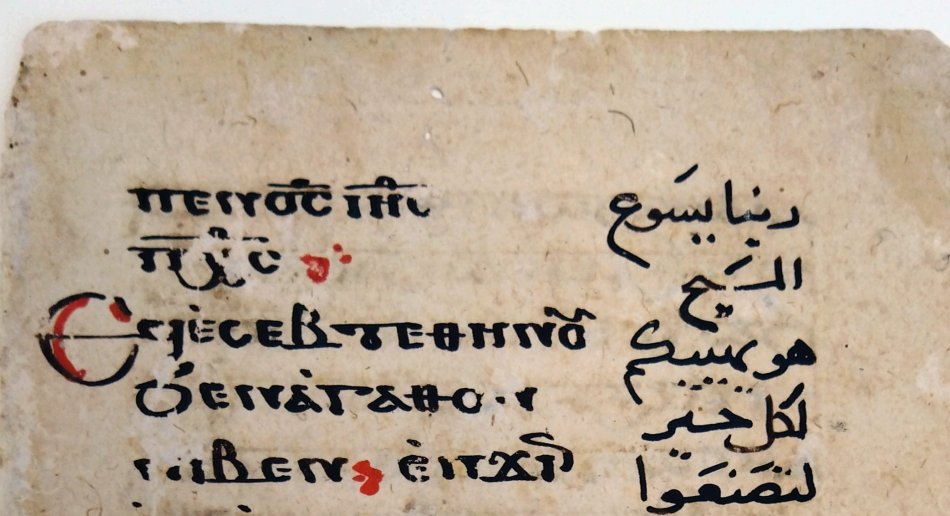
During his visit to the Zentralbibliothek Zürich, Mina Monier had the privilege of examining uncatalogued material, among which he identified a previously unrecognised Coptic–Arabic manuscript fragment.
Using AI Agents to Prototype a Manuscript VRE
Published: 25. June 2026
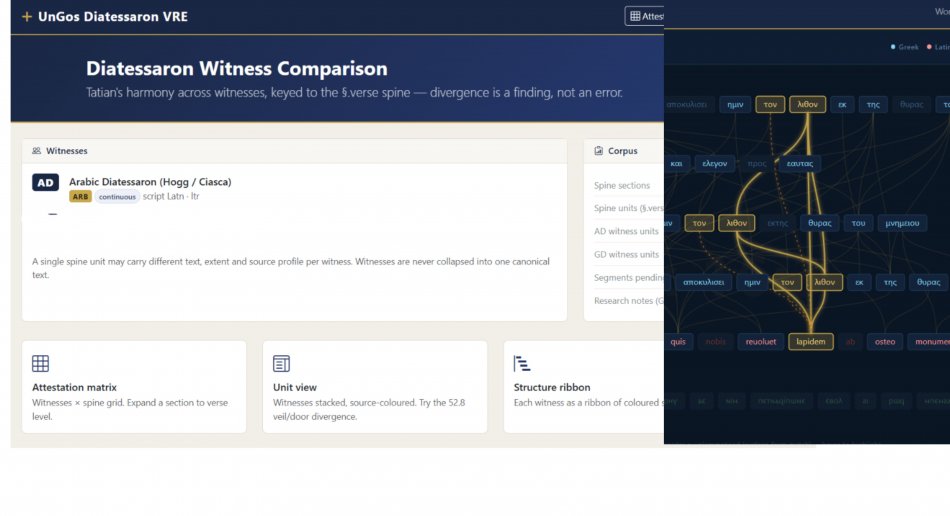
This post presents an experiment in AI-assisted digital humanities development. Using Claude Code, I built a local prototype of a Virtual Research Environment (VRE) for the study of Tatian’s Diatessaron. The purpose was to test whether AI-assisted coding can help transform manuscript data, research notes, and a conceptual model into a working tool for visualization, collation, and textual comparison.
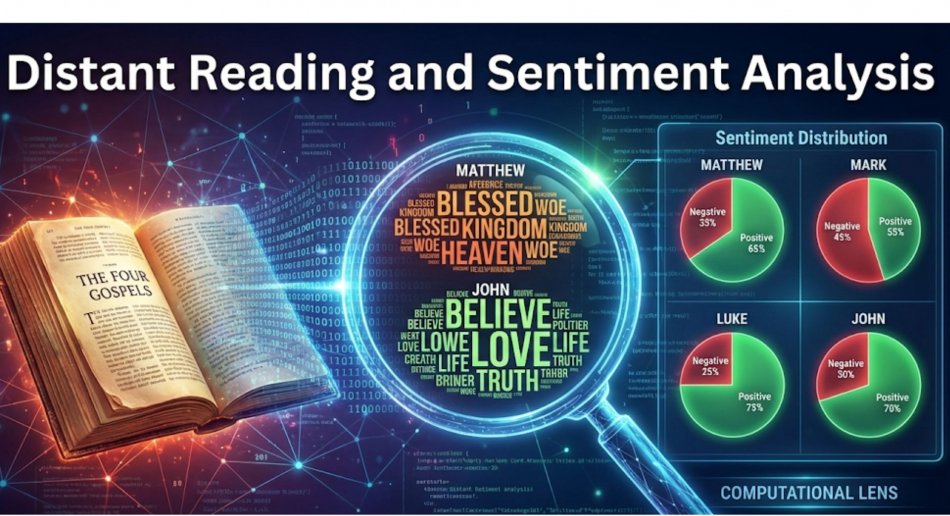
Distant Reading: analyzing the Gospels with Python and AI
Published: 19. February 2026
In Digital Humanities, distant reading uses computational tools to explore patterns across texts - patterns that may be difficult to perceive through close reading alone. Instead of replacing traditional interpretation, it complements it by providing statistical overviews that highlight tendencies, repetitions, and contrasts.
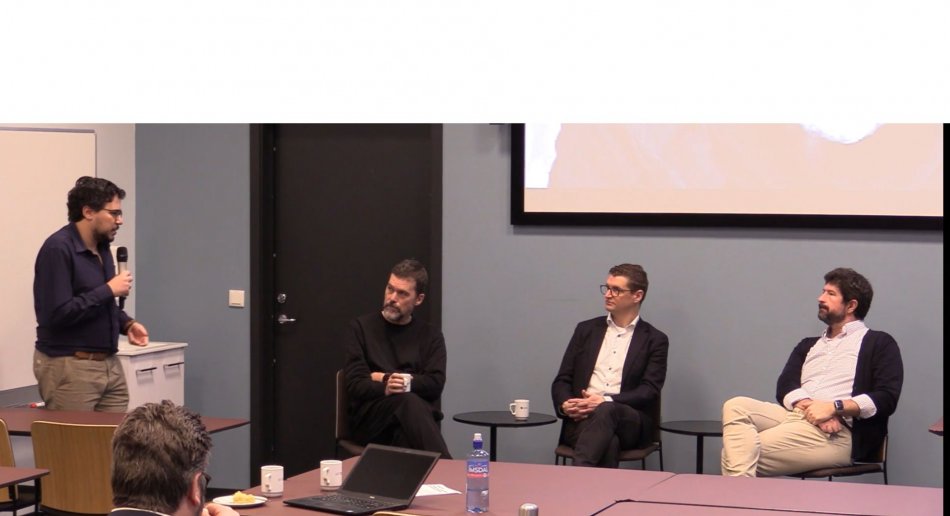
Artificial Intelligence and the Humanities: New Opportunities and Challenges
Published: 18. February 2026
In December 2025, L-MaSDR hosted a seminar exploring the opportunities, challenges, and responsibilities that AI presents for humanistic research. Watch the presentations here.